
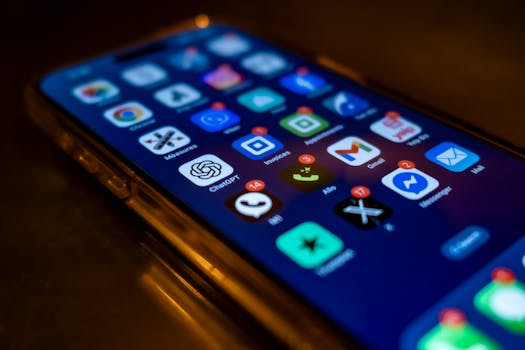
Everywhere you look, people check messages and share updates, making quick work of tasks. The mobile technology impact isn’t just visible—it’s inescapable throughout daily routines.
Understanding how mobile technology shapes how we work and communicate can make anyone faster, more responsive, and better informed. From meetings to project management, it powers real-world improvements.
Dive in to see practical ways the mobile technology impact is transforming workplaces, streamlining communication, and letting people work smarter—no matter where the job needs to be done.
Phone-Based Productivity: Applying Mobile Habits to Professional Routines
If you integrate mobile routines into work, you can reduce delays and get real responses. Try letting notifications prompt you for critical steps, much like reminders push daily habits.
Embracing the mobile technology impact means moving with tasks in your pocket. Approvals no longer get stalled, and colleagues actually reply in the moment.
Batching Tasks with Notification Timing
Imagine silencing workflow clutter and acting only on curated alerts. Smart professionals schedule all notifications to appear in three short waves daily, just like mealtime signals.
Colleagues hear, “I’ll respond when I see my next batch.” Everyone gains focus and avoids interruptions, fueling the mobile technology impact on productivity.
By syncing notification reviews, teams set expectations—no missed meetings or urgent approvals falling through, only streamlined collaboration at set points each day.
Instant Status Sharing: Routine Updates Anywhere
Picture quick voice messages sent from job sites—”Done with phase one, need feedback.” Mobile devices enable this kind of real-time update, preventing misunderstandings.
Rather than scheduling lengthy status calls, the mobile technology impact means quick check-ins that keep everyone synced without weighing down calendars, freeing up strategic time blocks.
Teams using instant sharing build accountability. Try a daily group update, timed with lunch, to recap progress and flag blockers before afternoon sprints begin.
| Action | Benefit | Best Tool | What To Try Now |
|---|---|---|---|
| Batch-checking notifications | Avoids distraction | Focus mode apps | Set device to alert only 3 times a day |
| Live-update messaging | Faster decisions | Voice notes | Send voice recaps after each work block |
| Mobile approvals | Unblocks projects instantly | Email apps | Approve requests as soon as notified |
| Calendar syncing | Reduces missed meetings | Calendar apps | Review schedule after morning alert |
| Attachment sharing | Speeds up reviews | Document scanning apps | Scan and send contracts in seconds |
Collaborative Tools on Phones: Doing Real Work Beyond Email
With purpose-built apps, teams coordinate projects without hunting through lengthy email threads. The mobile technology impact is clearest where people track, edit, and comment from their own devices.
Shared lists, digital boards, and integrated chat turn scattered files and scattered effort into focused progress, giving every collaborator up-to-the-minute context.
Assigning Tasks in Shared Boards
Team leads show their board, drag names onto cards, and assign deadlines in real time—”Lisa, finish section by Tuesday.” The mobile technology impact here: everyone knows their next step.
As cards move, messages ping directly to the responsible person’s phone. It’s visual progress, made actionable without stopping for a meeting.
- Use real-time assignment for transparent accountability—each task assigned on mobile displays who owns it and what’s due, cutting through confusion and finger-pointing instantly.
- Set push reminders per task so nothing lingers in limbo—timed pings keep urgent items top of mind without needing a long check-in session before progress gets made.
- Share visual task status by moving cards—watch tasks shift from “To Do” to “Done” as updates appear for the whole team, building motivation and momentum as projects evolve.
- Enable comment threads on board items to record quick context—each decision or hurdle tracked where work happens, eliminating scattered follow-ups and repeated explanations later.
- Document hand-off clearly—drop a link or file onto a card with a short action note, so the next owner jumps in without missing critical background or details.
Adopting visual boards and notification-driven updates ensures every assignment gets actioned, sparking tangible mobile technology impact within teams and across departments.
Dynamic Doc Editing in Shared Folders
People update proposals from lunch counters—not desktops. Mobile technology impact is clear when edits appear in seconds, not hours, with tracked comments visible to all.
Edit just-in-time on your device by opening files while on the go—add a fact, suggest a revision, leave a clarifying comment—all in the same shared folder instantly accessible.
- Co-edit documents live to fix issues in real time—multiple users editing at once reduces version confusion and quickly resolves unclear sections, letting projects advance without slowdown.
- View feedback from all device types—never wait for team members to return to a desktop before seeing needed corrections, so decision cycles stay short and responsive.
- Tag teammates as you edit to draw needed input—mention colleagues to bring their immediate attention only when review or input is requested, not with a generic “review when free” message.
- Pull up version histories on your phone—see what changed, when, and who did it without chasing old emails, so all work moves forward with full context and transparency.
- Enable offline editing during transit—work on documents without signal, then sync all changes instantly on reconnection, so travel time converts to productivity rather than downtime.
Live collaboration and flexible feedback loops create a visible mobile technology impact across document-heavy workflows, cutting through old delays and manual reviews.
Managing Work-Life Boundaries: Using Features to Protect Focus
You can reclaim personal time while staying informed by using built-in screen tools. The mobile technology impact becomes positive when you set boundaries with simple tricks anyone can apply right away.
Separating apps for work and home, pausing notifications, and disabling badges keeps after-hours work at bay and reduces burnout—turning mobile devices into allies, not stressors.
Custom Focus Modes for Each Role
A project manager toggles “Work Focus” from Monday to Friday, 8 to 6. “After work, I flick a switch, and only calls from family get through,” she says.
Colleagues learn to say, “I’ll get your reply during work focus hours.” By separating focus modes, the mobile technology impact reinforces working time versus family or solo hours.
Try splitting calendars or using a custom app suite for each context—your work doesn’t spill into movie night, and family chats won’t disrupt daily standup calls or urgent tasks anymore.
Auto-Replies and Quiet Hours Scripts
A trainer relies on auto-response at 7 PM: “I’m offline after 7—will reply tomorrow.” This script signals boundaries and keeps stress low for all parties, in every department.
Set quiet hours to block all but critical contacts. Your device responds, “I’m in focus time—will get back after 3 PM,” letting others self-solve or wait, supported by the mobile technology impact.
Experiment with varying quiet hour windows for different teammates. For example, Mondays start late for planning; adjust your auto-response window, so everyone’s expectations remain aligned.
Fieldwork Made Practical: Powering Offsite Jobs with Mobile Solutions
Mobile technology impact is transforming what team members can accomplish in the field. Instead of lugging a laptop everywhere, people rely on smartphones to report progress, capture signatures, and solve problems right on the spot.
Contractors, inspectors, or delivery coordinators use mobile cameras to scan documents, record completion, and instantly update digital logs—no more returning to the office just to file paperwork.
Checklist Apps: Guiding Remote Tasks
Use checklist apps for daily routines. An HVAC tech ticks off steps as jobs complete—”checked filter, replaced part, tested system.” That list creates visible proof of each mobile technology impact.
Supervisors review jobs live, approve work, or ask for a step to be repeated—all from their devices. Accountability and quality rise, paperwork headaches drop.
Try assigning checklists with completion photo uploads required; the tech snaps a picture at each step and attaches it, so you know instantly if the on-site work matches standards.
Data Capture in Real Time
Field reps log inventory, scan barcodes, and upload photos on site. The mobile technology impact? Updates hit the central system before a rep leaves the client’s lot, eliminating delays.
Speed and accuracy go up—fewer calls back to the office for clarification, and customers receive fast follow-ups.
Set up smart forms, so every critical data field gets entered quickly. If something’s missing, the app prompts the rep to fill gaps before submitting the report, improving quality with each action.
Recruitment and Onboarding with Messaging Apps: Human Touch in a High-Tech World
Recruiters and managers deliver instant feedback to candidates using mobile chat, creating a smooth candidate journey. This clear mobile technology impact results in higher acceptance rates and stronger first impressions.
They send personalized onboarding links, digital handbooks, and training videos directly to new hires, so orientation starts remotely—before the first on-site meeting ever happens.
Interview Scheduling Made Frictionless
Recruiters text candidates suggested times. The candidate replies with “Wednesday at noon?” The recruiter books it, confirmation pings instantly, showing how the mobile technology impact speeds hiring steps.
This sequence eliminates phone tag and lets everyone keep schedules straight on the same device. Candidates feel seen and valued instead of waiting in limbo.
Confirmations and reminders keep interview attendance high, while feedback can be shared quickly after each round for better candidate experience.
Onboarding Support Channels
Managers invite new hires to a private chat group: “Ask questions anytime.” Team members answer “Best to file expenses on Tuesday” or “Our team call is each Friday at 10.” Direct, instant help creates welcome.
The mobile technology impact builds connection before day one, making the transition smoother and letting new teammates hit the ground running instead of floundering.
Assign one teammate as a chat buddy and another as a reference for technical onboarding. New hires know who to ask, what to try, and when to expect answers.
| Mobile Action | What It Replaces | Time Saved | Next Best Step |
|---|---|---|---|
| Chat scheduling | Back-and-forth emails | Days to minutes | Text next interview window now |
| Live onboarding | Paper handbooks | Delays to instant | Send a digital handbook link |
| Q&A chats | Waiting for meetings | Hours to minutes | Create a new hire group chat today |
| Feedback forms | Mail-in reviews | Days to hours | Share feedback form by chat after interview |
| Signature collection | Physical paperwork | Trips to seconds | Start using digital signature apps |
Coordinating Across Time Zones: Keeping Teams and Clients in Sync
Leveraging the mobile technology impact, distributed teams and cross-regional clients get immediate updates with scheduling tools and smart reminders. No more guessing about meeting start times or urgent project deadlines.
Every mobile calendar marks the correct time zone, so reminders go out at the local hour. Everyone stays on the same page without working late or missing key handoffs.
Staggered Push Notifications
Imagine a globally dispersed marketing team receiving campaign reminders in their own languages at 9 AM local time. This concrete mobile technology impact ensures messages land when intended.
Assign time-specific triggers—”Remind Asia team at 10 AM JST; notify US team at 10 AM Eastern.” Workflows sync without confusion or scrambled last-minute requests.
Try setting device calendars to auto-convert time zones, so you always see both sender and recipient local time in meeting invites and deadline reminders.
Collaborative Work Windows
Dispersed engineering teams pick a two-hour overlap where all are online. “We share updates in that window, then resume solo tasks.” The mobile technology impact: no missed decisions, no wasted waiting.
Pinned group chats collect status notes, letting off-hours workers catch up faster than reading hours of email when they return. Project pace picks up—and energy stays focused.
If you manage such a team, try marking a daily “collaboration window” in your shared calendar as a must-attend slot. That makes every hand-off and decision visible, reducing delays across time zones.
Instant Knowledge Transfer: Training, Updates, and Micro-Learning on the Move
Mobile technology impact shines brightest when professionals access up-to-date guides anywhere. Bite-sized lessons, scheduled tips, and video walkthroughs keep everyone learning, whether commuting, on the clock, or waiting between appointments.
Create mini-tutorials or flashcard reminders, then push them to teams. Everyone stays current with product launches, policy shifts, or compliance updates without needing to schedule training rooms or webinars.
- Deliver daily micro-lessons automatically—set up five-minute tasks recapped in app notifications each morning, so all employees build skills instead of forgetting annual training.
- Distribute urgent policy updates company-wide—send out instant alerts so no one misses critical compliance deadlines or new safety requirements, even when out in the field.
- Circulate key procedures following incidents—if an error or mishap occurs, share step-by-step fixes instantly, giving the whole team clarity to avoid repeat mistakes.
- Refresh best practices with video demos—upload brief “watch now” clips for mobile, so skills stay sharp without needing scheduled class time or group meetings.
- Enable mobile learning on downtime—encourage staff to complete lessons while waiting in line, riding transit, or eating lunch, so development and engagement grow naturally during the workday.
Accessible micro-learning keeps everyone aligned, making the mobile technology impact measurable in safer, smarter, and more adaptable workplaces. Learning happens at the pace of daily business.
Finishing Strong: The Enduring Influence of Mobile Technology Impact
As seen everywhere from remote check-ins to policy updates, the mobile technology impact delivers practical flexibility, turns travel or transit into productive time, and closes gaps between distributed teams.
By setting clear boundaries and leveraging purpose-built apps, anyone can claim both efficiency and focus—no more wasted actions or missed hand-offs, just streamlined collaboration and continuous learning.
Embracing each new mobile technology impact and habit transforms working life. The tools change, but the core advantage remains: real progress, for real people, anywhere work happens.