
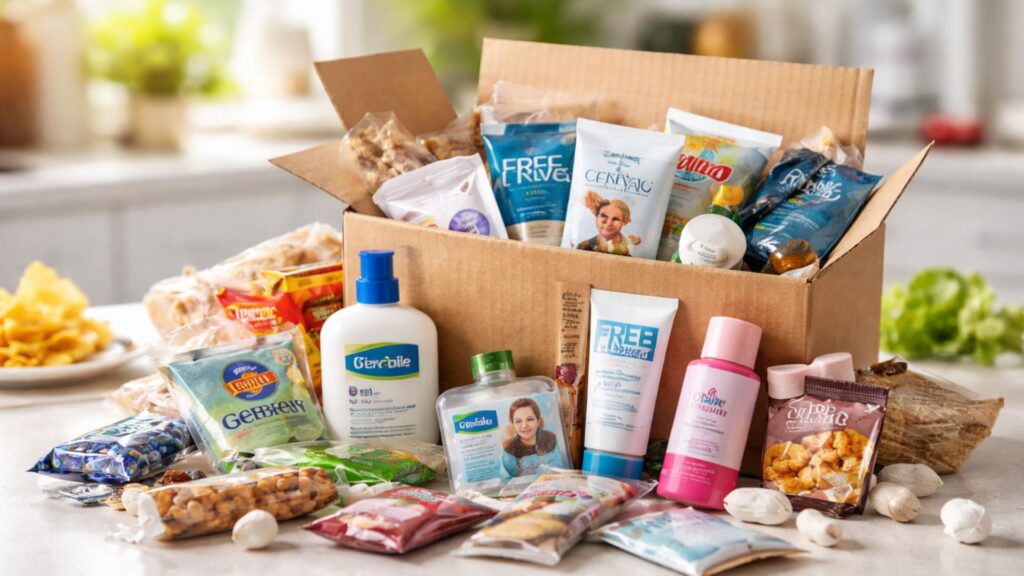
American brands distribute free samples to promote products and gather consumer feedback, and any shopper can take advantage of these opportunities by following a few simple principles.
In this guide, you’ll learn how free samples work in practice, where to find real opportunities, how to increase your chances of being selected, which logistical factors influence shipping, and, most importantly, how to keep everything safe throughout the process.
Step by step: How to create a simple routine to receive more samples
Building a light and consistent routine is what separates people who regularly receive samples from those who sign up and never see results. Here’s how to do it in a practical way.
Sign up for the main platforms
The first step is being present where campaigns actually happen. Creating accounts on reliable platforms increases the number of opportunities available to you.
Important tips:
- Use an email address you check regularly
- Confirm your registration via email
- Avoid creating multiple accounts
- Turn on notifications when available
The more trusted platforms you join, the greater your exposure to active campaigns.
Complete your entire profile
Platforms select participants based on their profiles. Fully completed profiles tend to receive more invitations.
Fill in carefully:
- Age range
- Household composition (children, baby, pets)
- Interests (beauty, home, food, health)
- Shopping habits
- Product preferences
Consistent and accurate information helps the system match you with relevant campaigns.
Check campaigns regularly
Many campaigns have limited spots and close quickly. Creating the habit of checking a few times per week increases your chances.
Simple routine:
- Check platforms 2–3 times per week
- Look for invitations in your email
- Apply when something compatible appears
Light but consistent engagement already makes a difference.
Respond to surveys and reviews
Active participation increases your credibility within the platforms and can generate more invitations over time.
Best practices:
- Respond within the deadline
- Be honest in your reviews
- Do not ignore surveys when possible
Active users tend to receive more opportunities in the long run.
Update your information when necessary
Small life changes can open the door to new campaigns.
Update your profile when there is:
- A change of address
- A new baby or child
- A new pet
- A shift in interests
- A change in shopping habits
Updated profiles are more likely to match active campaigns.
How much time does this routine require?
Less than you might think:
- Initial registration: about 10–15 minutes
- Weekly check-ins: just a few minutes
- Occasional surveys: 3–5 minutes
Just a few minutes per week can improve your eligibility.
What free samples really mean in practice
The term “free samples” can represent different models. Understanding the differences helps avoid confusion and unrealistic expectations.
Truly free samples
These are products sent at no cost, usually without requiring a credit card. Brands offer them to:
- Promote new products
- Generate public interest
- Collect consumer feedback
Typically, you create a profile, apply, and receive the product if selected.
Product testing in exchange for a review
In this model, you receive a product and are expected to:
- Test it
- Answer questions
- Submit an honest review
There is no payment involved, but there is a commitment to providing feedback.
Free offers with conditions
Some offers appear to be free samples but may involve:
- Automatic subscriptions
- Monthly renewals
- Charges after a trial period
That’s why understanding the terms before accepting is essential.
Where to actually find free samples
Opportunities usually come from three main sources.
Sampling platforms
These platforms connect brands and consumers. Selection depends on your profile and campaign availability.
Popular platforms include:
- PINCHme
- SampleSource
- ProductSamples
- Influenster
Each works in a similar way: you create a profile, check available campaigns, and participate when eligible.
Official brand programs
Some brands have their own programs offering welcome kits, coupons, and occasional samples, especially in the baby product segment.
Common examples include:
- Infant formula programs
- Baby product rewards programs
- Loyalty clubs offering perks and coupons
Shipping is not always guaranteed, but opportunities may appear over time.
Promotional campaigns
Product launches and seasonal promotions often include samples, particularly in categories such as beauty, personal care, and food.
Is there a difference between U.S. states?
There is no “easier” state for receiving samples, but logistical factors can influence shipping.
Contiguous states
Generally face fewer shipping barriers and shorter delivery times.
Alaska, Hawaii, and territories
May experience:
- Longer shipping times
- Some unavailable campaigns
- Delivery limitations
It is still possible to receive samples, just potentially less frequently.
Address type also matters
Some campaigns do not ship to:
- P.O. Boxes
- Military addresses
- Areas with logistical restrictions
A standard residential address typically has higher eligibility.
What really increases your chances
Receiving samples is not about luck. It depends on practical actions.
Complete profile
Platforms rely on your profile to match you with campaigns. The more complete it is, the better.
Consistency
Users who receive more samples usually:
- Respond to surveys
- Submit product reviews
- Keep their profile updated
Apply quickly
Some campaigns fill up fast. Regularly checking platforms helps you apply in time.
Join multiple platforms
Relying on just one source reduces your overall chances.
How to identify safe offers
Safety is the most important part of the process.
Signs of a trustworthy offer
- Does not require a credit card to release the sample
- Clearly explains what will be sent
- Has no hidden charges
- Comes from a known platform or official website
Warning signs
- Requests a card for “shipping fees”
- Confusing renewal terms
- Difficult cancellation process
- Exaggerated promises
Understanding automatic renewal offers
Some “free” offers may generate future charges if not canceled.
Simple rule:
- Read the terms before accepting
- Check for future billing
- Understand how to cancel
Transparency is usually a strong indicator of safety.
Types of products that appear most often
Not all categories are equally common.
More frequent:
- Baby products
- Cosmetics and skincare
- Personal hygiene items
- Snacks and food products
- Household goods
Less frequent:
- Electronics
- High-value items
- Large products
How long does it take to arrive?
Delivery depends on the campaign and logistics.
In general:
- Between 2 and 6 weeks after selection
- May vary by state
- Remote regions may take longer
Not every campaign ships to all applicants, since many operate through selective distribution.
Mistakes that prevent you from receiving samples
Many people receive nothing due to simple errors.
Incomplete profile
Incomplete profiles tend to receive fewer invitations.
Inconsistent information
Conflicting or unrealistic data can reduce credibility.
Not responding to surveys
Ignoring reviews decreases future opportunities.
Rarely checking campaigns
Campaigns close quickly. Infrequent checking leads to missed chances.
Creating multiple accounts
This may reduce eligibility or result in suspension.
Expecting immediate results
Consistency typically delivers better outcomes than impatience.
Avoiding these simple mistakes can significantly improve your eligibility over time.
Are free samples worth it?
It depends on your expectations. Samples are not a guaranteed source of frequent products, but they can provide real benefits when approached correctly.
Common advantages:
- Testing products before buying
- Saving money on everyday items
- Discovering new brands
- Receiving coupons and additional perks
Safety comes first
Avoid providing:
- A credit card without fully understanding the terms
- Personal information on unknown websites
- Sensitive details without verifying the source
Legitimate platforms are transparent and do not hide charges. When conditions are clear, the experience is typically positive.
No. Legitimate samples usually do not require payment. If there is a charge, automatic subscription, or request for a credit card without clear explanation, review the terms carefully before proceeding.
In most cases, yes. However, many campaigns operate through selection based on user profile details such as age, interests, and shopping habits. Keeping your profile complete increases your chances.
Delivery time varies depending on the campaign and logistics. Typically, it can take 2 to 6 weeks after confirmation of selection, with longer timelines in areas with shipping limitations.
It depends on participation. Users who check campaigns regularly, respond to surveys, and maintain updated profiles tend to receive more opportunities over time.
Some campaigns do not ship to P.O. Boxes or military addresses. A standard residential address usually aligns better with shipping requirements.
Ignoring evaluations may reduce your future chances, as platforms prioritize active participants who complete the process.
It is rare. Most samples involve lower-cost items such as beauty products, personal care items, food, or household goods.
Trustworthy offers are transparent, do not hide charges, and clearly explain the conditions. Always read the terms, verify the campaign source, and avoid providing sensitive information unnecessarily.
מַסְקָנָה
Receiving free samples in the U.S. is entirely possible when you understand how the process works. There is no “easier” state and no hidden secret. What truly makes a difference is:
- A complete profile
- Active participation
- Consistency
- Attention to terms
- Focus on safe offers
With a simple routine and basic precautions, your chances increase naturally. No unrealistic promises, no unnecessary risks, just method, consistency, and safety.


