
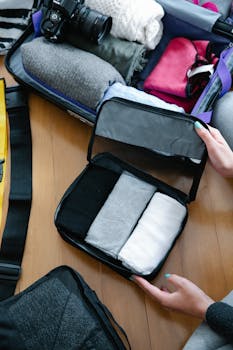
Imagine standing at the airport, bag in hand, unconcerned about excess baggage or missing essentials. Efficient travelers know how to pack light travel for any destination or itinerary.
Packing light matters when you want flexibility, save money on baggage fees, and reduce stress along the way. Anyone can learn to feel confident traveling with less.
Let this guide share simple strategies, tested routines, and practical checklists to help you master how to pack light travel—whether it’s a city weekend or a global adventure.
Building the Perfect Capsule Wardrobe for Travel Efficiency
A capsule wardrobe guarantees you’re always dressed right and never weighed down. It’s the cornerstone for those who seek real how to pack light travel results.
By limiting choices but not flexibility, you enable fast outfit decisions each day. For quick trips or long journeys, this habit brings order to your packing routine.
Select Clothes That Mix and Match Right Away
Prioritize versatile basics—think neutral t-shirts, dark jeans, and a simple jacket. Each piece should complement the others, so three shirts and two pants become six outfits.
If you’d wear it next week at home, you’ll wear it on the road. Favor items that layer well, dry quickly, and don’t wrinkle easily for classic how to pack light travel results.
Lay out all planned outfits on your bed before packing. Remove anything you hesitate about or that won’t work in at least two combinations.
Create a “Just Enough” Packing Formula
The 5-4-3-2-1 rule: five tops, four bottoms, three accessories, two shoes, one outer layer. Modify this for trip length, but never double up without justification.
If you anticipate laundry access, trim your selection. Keep to quick-drying fabrics—synthetic blends or merino—so washing by hand means wearing again the next day.
Packing by this formula cuts decisions and teaches discipline, making how to pack light travel an automatic habit for every future trip.
| Item | Feature | Ideal Use | What To Do Next |
|---|---|---|---|
| Merino T-Shirt | Odor-resistant | Hot/cold climates | Pack one instead of three cotton tees |
| Convertible Pants | Change to shorts | Mixed weather | Choose as your main bottom wear |
| Pashmina Scarf | Lightweight, multipurpose | Layering, warmth | Add for warmth or style boost |
| Compact Rain Shell | Packs ultra small | Wet destinations | Stuff at bottom of bag, grab when needed |
| Slip-on Shoes | Easy on/off | Airport, city walking | Wear as your second footwear choice |
Curating the Essential Tech and Toiletries for a Streamlined Bag
Your kit should include only tech and toiletries you’ll truly need, separating essentials from gadgets that become dead weight. Focusing on the minimum makes how to pack light travel much easier.
A single multi-port charger, universal adapter, and well-sealed toiletry pouch handle nearly all situations. Save space by reducing duplicates and skipping “just in case” extras.
Picking Multi-Function Tech for Maximum Impact
One compact power bank, lightweight headphones, and universal cables serve you better than a jumble of single-use gear. Save gigabytes by pre-downloading maps and entertainment.
If packing a laptop, choose a sturdy sleeve and leave the bulky case. Many travelers realize a slim tablet covers emails, reading, and entertainment on short trips, enhancing how to pack light travel.
- Download destination essentials (offline maps, translations) for guaranteed function without Wi-Fi.
- Combine charging needs with multi-ended cables—one wire, three gadgets.
- Use a simple e-reader over multiple books. If you finish, swap titles at your hostel.
- Pack noise-canceling earbuds; skip both over-ear and standard headphones.
- A phone with a capable camera replaces most point-and-shoot devices.
Consolidating devices creates space for souvenirs or just leaves your bag lighter, supporting every how to pack light travel goal.
Downsizing Toiletries Without Compromising Hygiene
Go solid when possible: shampoo or soap bars pack small and won’t spill. Use refillable 3-ounce bottles for shampoo, sunscreen, or specialty creams you really need.
“I can buy toothpaste and travel-size deodorant at my destination,” says smart packers. Remember most hotels or Airbnbs supply basics; check so you can leave items home next time.
- Opt for a compact toothbrush with built-in cover—no bulky case needed—saving both space and clean-up worries after each use.
- Carry only enough contact lenses for the journey, plus a mini bottle of solution, so nothing expires or leaks.
- Use tiny zip-bags instead of hard cases for bandages and first-aid—flexible and fits anywhere.
- Decant liquid makeup into small jars rather than risking leaks in big containers.
- Pack a microfiber face cloth—doubles as body towel in a pinch—dries fast and takes less space.
Streamlined toiletries support how to pack light travel by reducing your liquids and giving you options when airport security checks your bag.
Packing Organizers and Compression Solutions That Truly Work
Packing cubes and compression sacks change how to pack light travel. They help you organize clothing, squeeze space, and locate items fast when you’re on a tight schedule.
Instead of shoving everything into a suitcase, use these tools as mini drawers—one for shirts, another for socks—so you’re never pulling your bag apart at every stop.
Using Packing Cubes to Maintain Order on the Move
Choose three color-coded packing cubes: shirts, underwear, jackets. Each cube keeps similar items together and simplifies repacking after room changes or TSA checks.
Roll clothes before placing them inside; this reduces wrinkles and maximizes space. It also makes the most of how to pack light travel even with smaller carry-ons.
Slim or zippered cubes help you compress clothing. When you arrive, pull out only the cube you need for the night instead of emptying the entire bag.
Making Compression Bags Your Secret Weapon
Try clear, zip-sealing compression sacks for jackets or heavier fabrics. Sit on packed bags to remove extra air before sealing, then flatten out inside your luggage.
Compression bags let you bring an extra sweater for alpine travel—without giving up more space. Their clear sides make checking contents a breeze—the ultimate how to pack light travel hack.
If you know you’ll shop at markets or need to save space later, pack one empty compression bag. Fill it on your return for instant bag-space expansion.
Trimming Your Bag to Only What the Destination Demands
The most effective how to pack light travel strategies respond to your specific trip, not general rules. Check the weather, social customs, and your lodging’s resources before choosing gear.
Repeating one night’s outfit is fine in remote areas but may not work in cities with formal dinners. Adapt your bag each time for more comfort—and more adventure.
Letting Itinerary Shape Every Item You Pack
If you’ll hike, expect mud and carry spares for walking. For urban museum visits, stick to smart-casual basics you can dress up with accessories.
A sandals-packing traveler uses the script: “One pair for beach, one for dinners—don’t add sneakers unless I’ll jog.” Find your own packing scripts and stick with them.
Packing for multi-stop, mixed-climate trips? Keep “layering” as your mantra; a rain shell and light fleece cover most forecasts and climates, keeping how to pack light travel manageable.
Anticipating Cultural and Climate Needs
Pack scarves or modest layers for countries with religious sites. Shorts may be okay in Scandinavia but not in Southeast Asia. A respectful wardrobe means fewer awkward situations abroad.
Preparing for tropical rain or high altitude? Choose quick-dry pants or a thermal base layer, not heavy jeans. Check forecasts again 48 hours before departure to finalize your bag.
Document your favorite complete outfits. If you notice staples you rarely use after a trip, edit your future packing lists to sharpen your how to pack light travel skills.
Smart Personal-Item Choices for Maximum In-Transit Comfort
Bringing the right personal item means always having essentials at hand—passport, snacks, water, battery pack. It changes how to pack light travel for airport waits, sightseeing, or bus rides.
Choose a bag you’ll use at your destination—think lightweight backpack or crossbody tote—so you avoid bringing extras and double your utility per item packed.
- Pack your travel wallet and passport in an RFID pouch at the bottom of your day pack—keeps essentials accessible and safe from theft or drops.
- Keep snacks, a reusable water bottle, and the phone charger in a side pocket for quick access at gates or city parks.
- Stow a packable shopping tote for impromptu picnics or market visits. If you buy groceries, reuse this instead of adding a plastic bag in other countries.
- Slip a backup face mask and hand sanitizer in a zip pocket so you’re prepared for enclosed spaces or local requirements.
- Attach a luggage tag with your name and phone number—lost and found returns happen when details are easy to spot.
This approach keeps you nimble and improves your experience at each step—a core strength for those serious about how to pack light travel every trip.
Everyday Habits That Reinforce Packing Light Mindsets
Traveling light stems from habits built at home. Practicing with smaller bags for daily commutes or weekend trips means you develop discipline before a big journey.
Each step—list, sort, remove—teaches you how to pack light travel without overthinking or second-guessing what matters for happiness on the road.
Testing Your Packing Skills at Home
Pack two trial bags for the same trip, one with your usual extras, the other stripped down. Carry each for half a day and note comfort, speed, and ease.
Mention your experiment to a travel buddy and compare choices. Every trip refines your script for deciding “take or leave,” building stronger how to pack light travel instincts.
Repack after two days—remove unused items, replace unworn shoes with lighter ones. Eventually, this editing becomes second nature and lets you travel farther, happier.
Using Experience to Optimize Future Trips
Document what you use and what stayed in your bag after each journey. If you find multiples (three phone chargers, five shirts), simplify before next time.
Apply this feedback immediately: edit your digital packing list right after unpacking. Keeping revisions fresh means each new trip is lighter and more enjoyable—a real how to pack light travel win.
Share your lessons with friends; group learning makes the habit stick. Each shared win is another reason to travel lighter next season.
Practical Takeaways for Confident, Light Packing Every Time
Light packing leads to smoother trips, easier transits, and more spontaneous exploration—real proof that how to pack light travel changes how you experience the world.
Each trip offers new lessons, routines, and scripts to refine, making your next journey simpler and more liberating. Packing smart is an ongoing, rewarding skill.
Adopt these habits, test out a personal packing script, and watch your confidence grow with every adventure. How to pack light travel is the key to unlocking more from less.


